
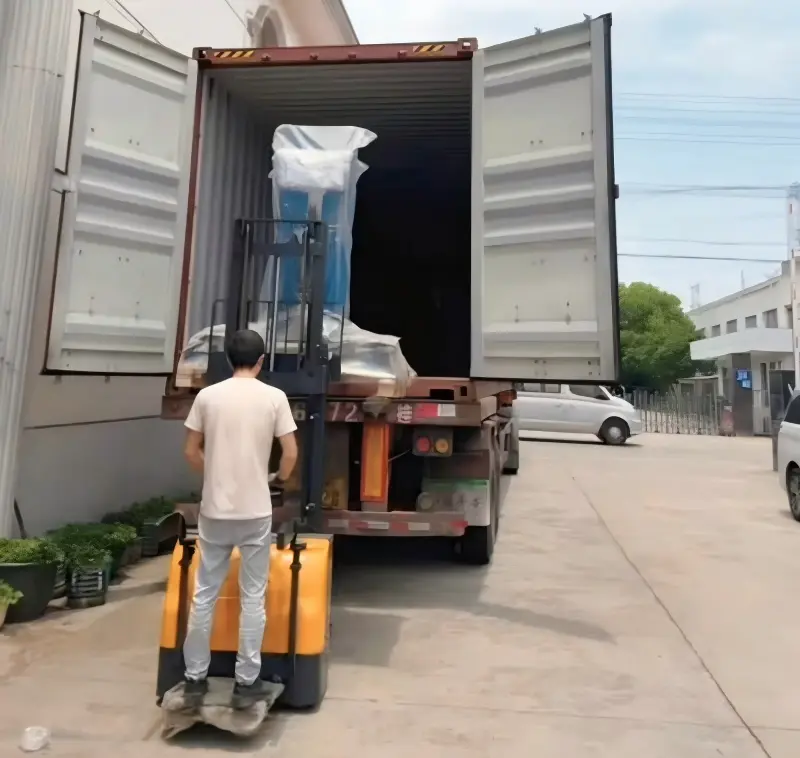
Stacker Machine What It Is and How Warehouses Use It
Learn what a stacker machine is how it works and why warehouses use it for efficient material handling and storage

Running out of vertical storage space in your warehouse? A full-sized forklift may not always be the most practical solution, especially when you need to handle pallets in narrow aisles or operate within a limited equipment budget.
A stacker machine offers a compact solution for lifting, moving, and positioning palletized goods. Depending on the model, it can help warehouses make better use of vertical storage space while reducing the physical effort required for material handling.
But not every stacker is suitable for every warehouse. Load capacity, lifting height, pallet design, and daily operating frequency all influence which equipment will work best.
In this guide, we’ll explain what a stacker machine is, how different models work, where they’re commonly used, and what to consider before purchasing one.
What Is a Stacker Machine?
A stacker machine is a type of material handling equipment designed to lift and position palletized goods at different heights. It is commonly used in warehouses, factories, distribution centers, and storage facilities.
Unlike a standard pallet jack, which primarily moves pallets at floor level, a stacker can raise loads to elevated storage positions.
Compared with many conventional forklifts, warehouse stackers generally have a more compact design and are often suitable for shorter travel distances and moderate lifting requirements.
Stacker equipment is available in several configurations, including manual hydraulic, semi-electric, and fully electric models. Each type offers different levels of lifting assistance, travel control, and operating efficiency.
How Does a Stacker Machine Work?
Most pallet stackers use a vertical mast, lifting forks, and a hydraulic or electrically powered lifting mechanism.
The operator positions the forks beneath a compatible pallet, raises the load to the required height, and moves or positions it according to the equipment’s operating capabilities.
The lifting and travel mechanisms vary depending on the stacker type.
Manual Hydraulic Stacker
A manual hydraulic stacker uses a hand pump or foot pedal to operate the lifting mechanism.
Hydraulic pressure raises the forks, while a controlled release mechanism allows the operator to lower the load.
The equipment is generally moved manually, making it suitable for occasional lifting tasks and relatively short travel distances.
Manual stackers are often considered by smaller warehouses that need basic pallet lifting equipment without powered lifting or travel.
Semi-Electric Stacker
A semi-electric stacker combines manual travel with electrically powered lifting.
An electric motor drives a hydraulic pump to raise the forks, reducing the physical effort required for repeated lifting operations.
However, the operator still pushes or pulls the equipment when moving pallets.
This configuration can be useful for businesses that require regular pallet stacking but do not need a fully powered travel system.
Fully Electric Stacker
A fully electric stacker uses powered systems for both lifting and travel.
Operators control movement and lifting through the machine’s designated controls, reducing the physical effort associated with repeated pallet handling.
Fully electric models are commonly used in warehouses with higher operating frequency, repeated stacking cycles, or longer internal travel distances.
Battery capacity, charging arrangements, and operating conditions should be considered when selecting an electric model.
Common Applications of Stacker Machines in Warehouses
A stacker machine can support several warehouse operations, depending on its design and lifting capabilities.
1. Vertical Pallet Storage
One of the primary applications of warehouse stacking equipment is placing pallets onto storage racks.
By lifting goods above floor level, stackers allow businesses to use available vertical storage space more effectively.
The required lifting height and residual load capacity must match the warehouse racking system.
2. Pallet Handling in Narrow Aisles
Compact stackers can be suitable for warehouses where available operating space is limited.
Their relatively small dimensions may allow operators to maneuver in areas where larger equipment is less practical.
However, minimum aisle width depends on the machine’s dimensions, pallet size, turning requirements, and operating configuration.
Buyers should confirm the manufacturer’s specified working aisle requirements before purchasing.
3. Warehouse Inventory Organization
Stacker equipment can help workers move palletized inventory between designated storage and staging areas.
This may improve organization and reduce unnecessary manual handling when the equipment is properly matched to the workload.
4. Production and Material Supply
In manufacturing facilities, stackers may be used to move palletized materials between storage locations and production areas.
They can also support material positioning at suitable working heights, provided the equipment is designed and approved for the intended application.
5. Loading and Unloading Operations
Certain stacker configurations can assist with loading and unloading operations when dock conditions, vehicle access, floor surfaces, and equipment capabilities are suitable.
Not all stackers are designed to enter trucks or operate on loading ramps. These applications require specific equipment compatibility and operating assessments.
Types of Stacker Machines: Which One Do You Need?
Different stacker configurations are designed for different warehouse workloads.
| Stacker Type | Lifting Method | Travel Method | Typical Application |
|---|---|---|---|
| Manual Hydraulic Stacker | Manual hydraulic lifting | Manual movement | Occasional pallet stacking |
| Semi-Electric Stacker | Electric hydraulic lifting | Manual movement | Regular lifting over short distances |
| Fully Electric Stacker | Powered lifting | Powered travel | Frequent warehouse pallet handling |
| Counterbalanced Stacker | Hydraulic or powered lifting, depending on model | Model-dependent | Applications requiring unobstructed fork access |
Actual lifting capacities, dimensions, and operating capabilities vary by manufacturer and model.
Manual vs Semi-Electric vs Fully Electric Stacker
The main differences involve operator effort, operating frequency, and equipment complexity.
A manual stacker generally has a simpler structure and may require less initial investment, but lifting and travel involve more physical effort.
A semi-electric model reduces lifting effort while retaining manual travel, making it a possible intermediate option.
A fully electric stacker provides powered lifting and movement, which may be beneficial for repetitive operations.
The most suitable choice depends on the weight of the loads, travel distance, number of daily lifting cycles, and available budget.
How to Choose the Right Stacker Machine for Your Warehouse
Choosing a stacker machine requires more than comparing equipment prices.
The following factors should be evaluated before making a purchasing decision.
1. Determine the Required Load Capacity
Identify the maximum weight of the pallets your warehouse needs to handle.
The selected equipment must provide sufficient lifting capacity for the intended load and operating conditions.
Rated capacity may be affected by load center, lifting height, attachments, and equipment configuration.
Always check the manufacturer’s capacity information, including residual capacity at the required lifting height.
2. Measure the Maximum Lifting Height
Determine the highest storage position that the stacker must reach.
The selected model should provide adequate fork lifting height for the intended racking arrangement.
You should also consider the warehouse ceiling height, door clearance, and mast dimensions.
3. Check Warehouse Aisle Width
Measure the available working space between storage racks and other obstacles.
The stacker must have enough room to approach, turn, and position pallets safely.
Minimum operating aisle width varies by model and pallet configuration, so manufacturer specifications should be used rather than a universal estimate.
4. Evaluate Daily Operating Frequency
Consider how often pallets are lifted and moved during a typical working day.
For occasional lifting tasks, a manual hydraulic stacker may be sufficient.
For repeated lifting operations with limited travel distances, a semi-electric model may reduce operator effort.
For frequent pallet movement and longer travel distances, a fully electric stacker may be more suitable.
5. Confirm Pallet Compatibility
Pallet dimensions and bottom structure can affect equipment compatibility.
Some stackers have support legs that must fit around or beneath the pallet, while other configurations provide different fork access arrangements.
Check the pallet design, fork dimensions, and support-leg clearance before ordering.
6. Consider Floor Conditions
Stackers are generally intended for use on suitable load-bearing surfaces.
Uneven floors, steep gradients, damaged surfaces, and unsuitable ramps can affect stability and safe operation.
Confirm that the selected model is appropriate for the intended working environment.
7. Review Maintenance and Support Requirements
Before purchasing, consider spare parts availability, maintenance requirements, and technical support.
Electric models also require attention to battery specifications, charging arrangements, and electrical components.
For international equipment buyers, access to documentation and replacement components may be important purchasing considerations.
Stacker Machine vs Forklift: What’s the Difference?
Stackers and forklifts both handle palletized materials, but they are designed for different operating requirements.
| Comparison | Stacker Machine | Conventional Forklift |
|---|---|---|
| Main Function | Pallet lifting and stacking | General lifting and material transport |
| Equipment Size | Generally compact | Often larger |
| Operating Space | Suitable for many restricted warehouse layouts | Depends on forklift type and configuration |
| Load Capacity | Generally suited to lighter or moderate loads | Wider range, including heavy-duty applications |
| Travel Distance | Often used for shorter movements | Commonly used for longer material transport |
| Initial Investment | Often lower for comparable basic applications | Often higher |
| Typical Applications | Indoor storage and pallet stacking | Warehouses, factories, yards, and logistics operations |
A stacker machine may be a practical solution for businesses that primarily need to lift pallets onto racks and move them over relatively short distances.
A forklift may be more appropriate for heavier loads, longer travel distances, or demanding operating environments.
Neither option is universally better. The correct choice depends on actual warehouse requirements.
Benefits of Using a Stacker Machine
Better Use of Vertical Storage Space
Stackers allow warehouses to position compatible palletized loads on elevated storage racks.
This can help businesses organize inventory without relying exclusively on floor-level storage.
Compact Equipment Design
Many stacker models have relatively compact dimensions, making them suitable for facilities where larger equipment would be difficult to maneuver.
Reduced Manual Lifting Effort
Semi-electric and fully electric stackers can reduce the physical effort required for lifting operations compared with manually operated hydraulic equipment.
The extent of this benefit depends on the model and working conditions.
Equipment Options for Different Budgets
Manual, semi-electric, and fully electric stackers provide different combinations of purchase cost, operating assistance, and equipment complexity.
Businesses can select a configuration that matches their operational requirements instead of paying for capabilities they do not need.
Flexible Warehouse Applications
Depending on the equipment design, stackers can support pallet storage, material movement, inventory organization, and production supply operations.
Stacker Machine Safety and Maintenance Tips
Safe operation and routine maintenance are essential for reliable material handling.
Before each shift, operators should inspect the equipment according to the manufacturer’s instructions.
Important inspection points may include:
- Forks and lifting components
- Mast and hydraulic system
- Wheels and steering components
- Brakes and safety devices
- Battery and electrical connections, where applicable
- Visible signs of leakage, damage, or abnormal wear
Operators should never exceed the rated lifting capacity or use the machine in unsuitable conditions.
Loads must be correctly positioned and stable before lifting.
During travel, the load should be kept at the manufacturer-recommended travel height, with clear visibility and appropriate operating speed.
Operators must receive suitable training and follow applicable workplace safety requirements.
Maintenance intervals and procedures should follow the manufacturer’s recommendations.
Frequently Asked Questions About Stacker Machines
What Is a Stacker Machine Used For?
A stacker machine is used to lift, move, and position palletized goods in warehouses, factories, and storage facilities. Common applications include pallet stacking, inventory organization, and internal material handling.
What Is the Difference Between a Manual and Semi-Electric Stacker?
A manual hydraulic stacker uses a manually operated lifting mechanism and generally requires manual travel.
A semi-electric stacker uses powered hydraulic lifting while retaining manual movement.
The main difference is the amount of physical effort required for lifting operations.
Can a Stacker Machine Operate in Narrow Aisles?
Many compact stackers are suitable for restricted warehouse layouts.
However, the required aisle width depends on the equipment dimensions, pallet size, turning radius, and operating configuration.
How Much Weight Can a Stacker Machine Lift?
Lifting capacity varies by equipment type and model.
Buyers should check the manufacturer’s rated load capacity and verify that sufficient capacity remains at the intended lifting height and load center.
Is a Stacker Machine Suitable for Small Warehouses?
A manual or semi-electric stacker can be suitable for smaller warehouses that handle palletized goods over relatively short distances.
Equipment selection should be based on load weight, lifting height, aisle width, floor conditions, and daily operating frequency.
Can a Stacker Machine Replace a Forklift?
A stacker may replace a forklift for certain indoor pallet lifting and short-distance handling applications.
However, forklifts may still be required for heavier loads, longer transport distances, or operating environments beyond the stacker’s capabilities.
Conclusion
A stacker machine can help warehouses improve vertical storage utilization and simplify daily pallet handling operations.
Manual, semi-electric, and fully electric stackers offer different levels of lifting assistance, travel capability, and operating efficiency.
The right choice depends on load capacity, lifting height, warehouse layout, pallet compatibility, and daily workload.
Before purchasing, compare the manufacturer’s technical specifications with your actual operating requirements. Selecting suitable warehouse stacking equipment can help improve material handling efficiency while avoiding unnecessary equipment costs.